
Can You Claim Tools and Equipment for Work?
You may be able to claim a deduction for tools and equipment you buy and use to perform your employment duties.
The item needs to have a sufficient connection with earning your employment income, you generally need to have paid for it yourself, and you cannot claim an amount that your employer or another party has reimbursed.
You can generally only claim the work-related portion of an eligible tool or item of equipment. Private use must be excluded.
What Types of Tools and Equipment May Be Relevant?
Hand Tools
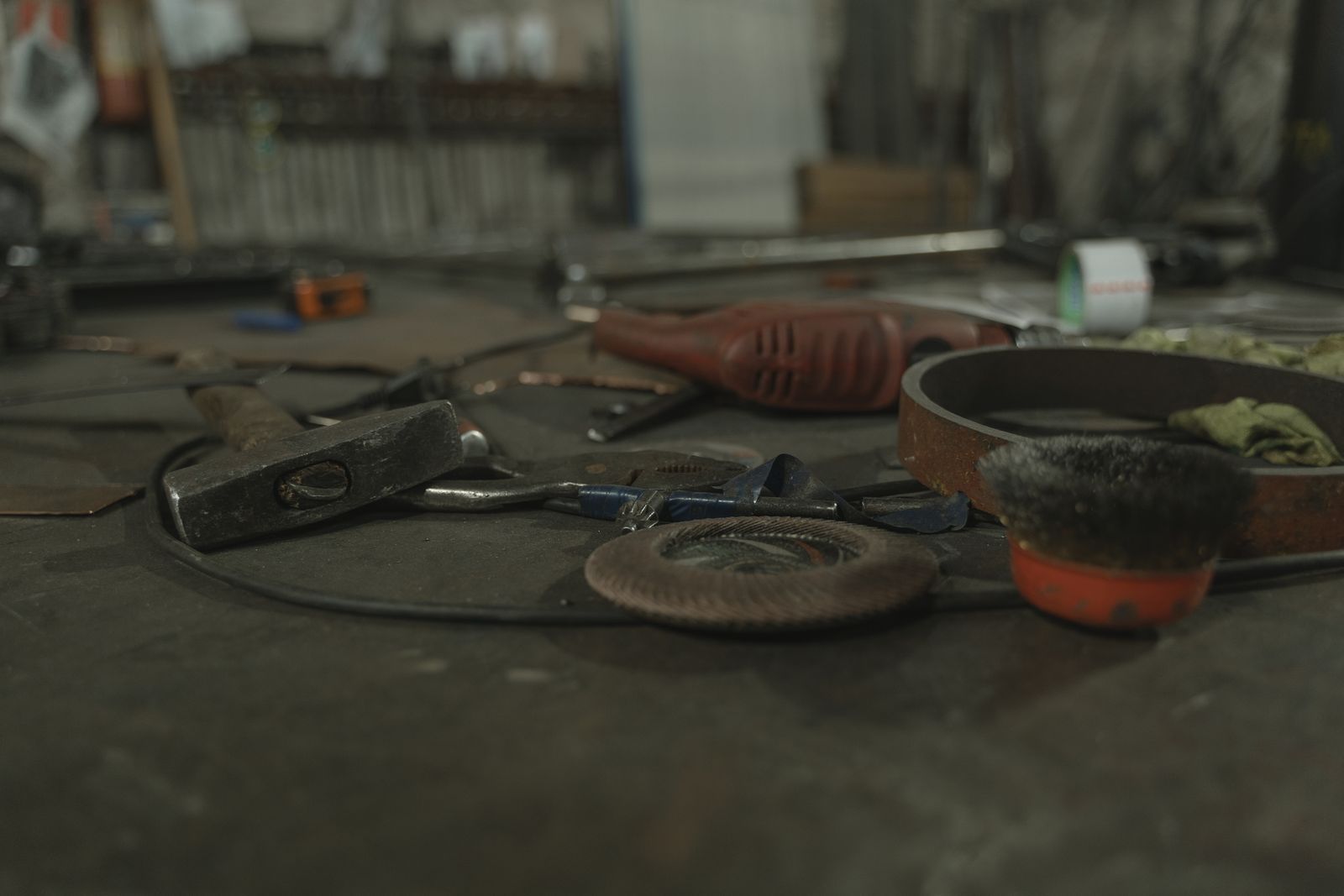
Spanners, screwdrivers, hammers, pliers and other tools required for work duties.
Power Tools
Drills, saws, grinders and other powered equipment used to perform your job.
Electronic Equipment
Laptops, tablets and specialised devices used for employment duties.
Tool Storage
Toolboxes and storage used for work equipment may be relevant depending on the circumstances.
The $300 Rule for Tools and Equipment
If an eligible tool or item of equipment costs $300 or less, you may be able to claim an immediate deduction for the work-related portion in the year you buy it.
However, the rules can change if the item forms part of a set, or is identical or substantially identical to other items that together cost more than $300.
The item still needs to be genuinely work-related. You cannot simply claim $300 because the threshold exists.
What If a Tool Costs More Than $300?
If a tool or item of equipment costs more than $300, you generally do not claim the full cost immediately as an employee deduction.
Instead, you may be able to claim the work-related decline in value of the item over its effective life.
A $900 Work Tool
A worker buys a specialised tool for $900 and uses it entirely for employment duties. Because the cost is more than $300, the worker would generally claim the decline in value rather than simply deducting the full $900 immediately.
What If Several Items Form Part of a Set?
The $300 threshold does not necessarily apply to each item separately if the items form part of a set that together costs more than $300.
For example, a ratchet or socket set may need to be treated as a set rather than as many separate low-cost items.
What About Identical or Substantially Identical Items?
Similar rules can apply where you buy several identical or substantially identical items and their combined cost exceeds $300.
What If You Use the Tool for Work and Private Purposes?
If you use a tool or piece of equipment for both work and private purposes, you generally need to apportion the deduction. Only the work-related percentage is deductible.
70% Work Use
A worker buys a $250 tool and reasonably works out that it is used 70% for employment duties and 30% privately. If it otherwise qualifies for an immediate deduction, the worker generally claims only the 70% work-related portion.
Can You Claim Tools Supplied by Your Employer?
You generally cannot claim the purchase cost of tools or equipment supplied by your employer or another party because you did not incur that cost yourself.
What If Your Employer Reimburses You?
If your employer fully reimburses the cost of a tool or piece of equipment, you generally cannot also claim that same cost as your own tax deduction.
If you receive a tool allowance instead, the allowance and the actual deductible expense should be considered separately.
Can You Claim Repairs to Work Tools?
You may be able to claim the work-related cost of repairing tools and equipment you use for employment duties. If the item is also used privately, the repair cost may need to be apportioned.
Tools Bought Part Way Through the Year
If an item needs to be claimed through decline in value and you buy it part way through the financial year, you generally claim only the decline in value for the period you owned it during that income year.
Tools for Construction Workers and Tradies
Nepali construction workers, electricians, plumbers, carpenters, mechanics and other tradespeople may commonly buy their own hand tools, power tools, toolboxes and specialised equipment.
Keep invoices and receipts, and clearly separate employer-supplied tools from items you personally purchased.
Tools and Equipment for Hospitality, Cleaning and Care Workers
Workers outside the trades may also purchase specialised equipment used directly in their employment. Whether an item can be claimed depends on the employment arrangement, whether the employee paid for it and whether it is genuinely used to perform their work.
Laptops, Tablets and Electronic Equipment
Electronic equipment may be deductible where it is genuinely used to perform employment duties. Private use must be excluded, and items costing more than $300 may need to be claimed through decline in value rather than as an immediate deduction.
Tool Allowance vs Tool Deduction
A tool allowance paid by your employer does not automatically mean you can claim the exact same amount as a deduction.
The allowance is dealt with according to its income treatment, while your deduction is based on the eligible work-related expense you actually incurred.
Can Carrying Bulky Tools Make Home-to-Work Travel Deductible?
Ordinary travel between home and work is generally private. Limited circumstances can apply where you need to transport bulky tools or equipment that are essential for your work and there is no secure storage available at the workplace.
This is a specific rule and should not be treated as an automatic car deduction simply because you carry some work items in your vehicle.
Quick Guide: How Cost and Use Affect the Claim
| Situation | General Treatment |
|---|---|
| Eligible item costs $300 or less | May qualify for an immediate deduction for the work-related portion, subject to the relevant rules. |
| Eligible item costs more than $300 | Generally claimed through decline in value over time. |
| Part of a set costing more than $300 | May need to be claimed through decline in value even if each item individually costs less than $300. |
| Used partly privately | Claim generally limited to the work-related portion. |
| Employer supplied the tool | No employee purchase cost to claim. |
| Employer fully reimbursed the cost | Generally no deduction for the reimbursed amount. |
Common Tools and Equipment Deduction Mistakes
- claiming tools supplied by the employer
- claiming a fully reimbursed purchase
- claiming 100% when the item is also used privately
- claiming a tool over $300 immediately when decline in value should apply
- splitting a set into separate items to try to use the $300 threshold
- claiming ordinary personal items with little connection to work duties
- failing to keep purchase records
- confusing a tool allowance with an automatic deduction
What Records Should You Keep?
- receipts and invoices
- purchase dates and amounts
- details showing how the item relates to your job
- a reasonable work/private use calculation
- repair or maintenance invoices
- records of any employer reimbursement
What Should You Check Before Lodging?
- what the item cost
- whether it is part of a set
- whether similar items were purchased together
- how much you actually use it for employment duties
- whether your employer supplied or reimbursed it
- whether immediate deduction or decline in value rules apply
- whether you have adequate records
How Hamro Accountant Can Help
Hamro Accountant can help Nepali workers across Australia review work-related tool and equipment expenses and determine how eligible purchases may need to be treated in their tax return.
This can be especially useful where you purchased several tools, use equipment partly privately, received a tool allowance, were reimbursed by your employer or bought an expensive item that may need to be claimed through decline in value.